CASE STUDY 01
MOBILE APP: THE ART FULL AUDIO TOUR
role
Generalist: User Research | Interaction Design | Visual Design | Information Architecture | Equity-Focused
Product Designer (UX/UI)
-
User Research
-
Personas
-
User Journey Maps
-
Storyboarding
-
User Flows
-
Wireframing
-
Lo-fi Prototyping
-
Research Plans
-
Usability Studies
-
Affinity Diagramming
-
Mockups
-
Hi-fi Prototyping
-
Accessibility & WCAG Compliance
-
Design Systems (style guide)
-
Stakeholder Presentations
responsibilities
BUSINESS PROBLEM STATEMENT

Art Full is a digital e-learning company servicing the arts sector that wants to develop digital tools that enable museums to grow its visitor and membership engagement, so that it can expand, enhance, and modernize public access to the arts, both in and outside of the venue, through interactive multi-media content offerings.
THE PRODUCT
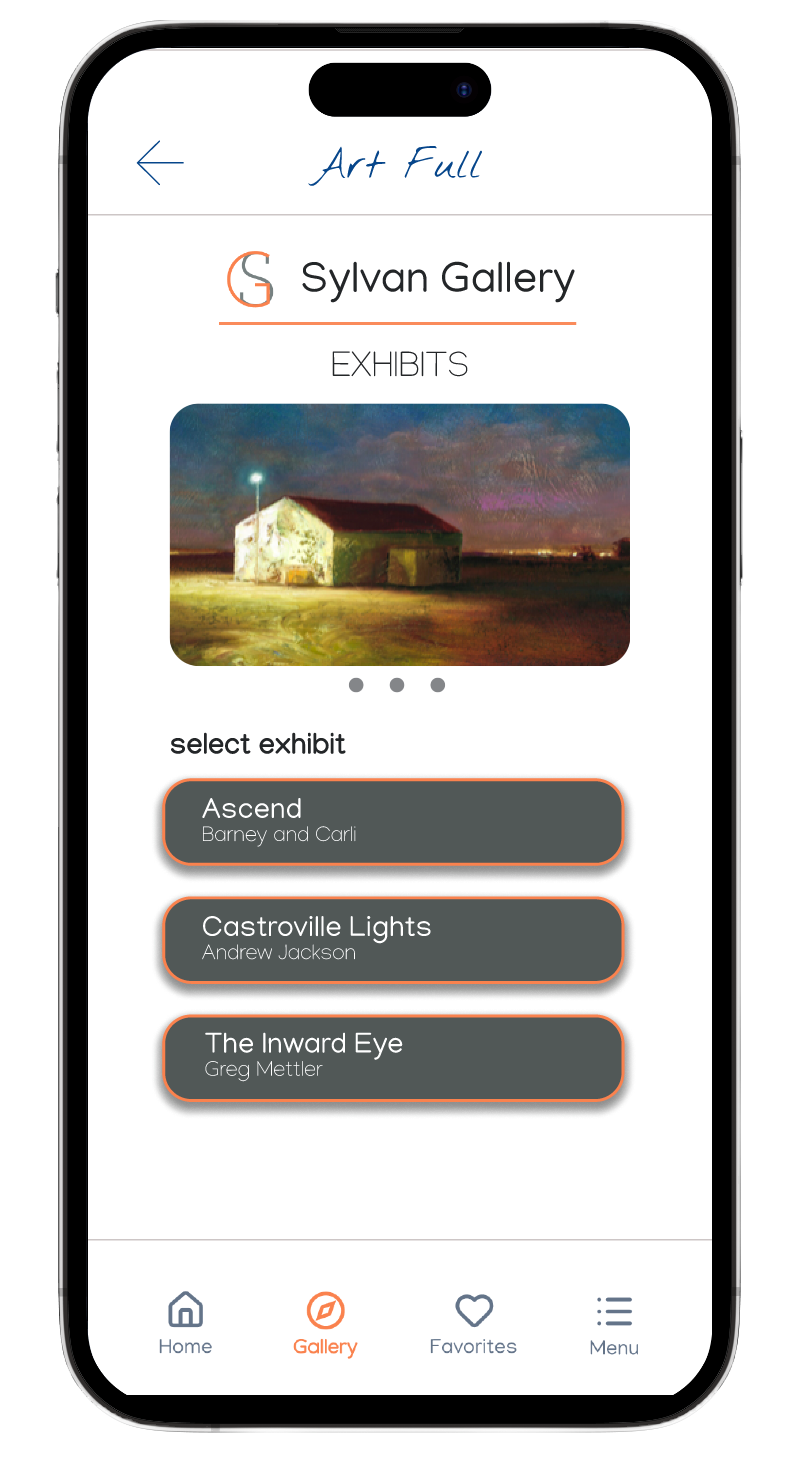
The Art Full App is a new App for museum and gallery visitors to access information and content on the art exhibits they attend. It is for smartphone users, as well as for those familiar with the use of smartphones, who visit museums and galleries, and enjoy exploring additional information and learning opportunities. The content is created in partnership with the specific museums and galleries. The App can be accessed and used both during and after the viewing of an exhibit.
Museum and gallery visitors want quick and easy access to information and content about the art exhibits they are viewing, both during and after their visit, because they want to continue and sustain their learning experience.
The Art Full App will provide users with quick and easy ways to access content and audio tours about the art exhibits they are attending, with its target audience of museum and gallery visitors who want access to a wide variety of multi-media content about these exhibits both during and after their visit.

the product
the problem
the goal

USER RESEARCH

“I want a quick, easy way to learn about the complete context of the artist and their art while I’m attending the exhibit. I want to be immersed.”
Age:
Resides:
Heritage:
Education:
Family Unit:
Occupation:
#shows/yr:
Olivia
Midlife
San Francisco, CA
Filipino
Bachelor's Degree
Partnered
Tech Professional
4+
primary personas

“I want an easy, quick way to access information during the exhibit, but I tend to socialize with friends too; so I also want access to the information later when I return home, especially artist process videos.”
Age:
Resides:
Heritage:
Education:
Family Unit:
Occupation:
#shows/yr:
Zoe
Midlife
Sand City, CA
Portuguese-American
Associate's Degree
Married - 2 adult children
HealthCare Professional
4+

An initial survey was conducted to collect a diverse group of participants that visit museums and galleries. From that sample, 20 participants were interviewed via Zoom about their experience with audio tours and content offered at museums and galleries.
Assumptions going into the initial interviews:
-
Participants would want to use their own smartphones for the audio tour app
-
Participants would want access to additional content about the artwork after they left the museum
Information that came to light after conducting the initial interviews:
-
Half of participants did not want to use their own phone for the audio tours because it was too distracting for them (work emails, etc.)
-
They preferred a separate device being offered by museum, but still wanted the same mobile app experience
-
The majority of participants wanted access to exhibit content both during and after their visit
-
Most interview participants wanted primarily audio or text during the exhibit, and then more expansive multimedia options and formats after their visit

initial user interviews
user journey map
USER STORIES


Olivia
As an avid art enthusiast who attends many exhibits a year, I want to go at my own pace while easily accessing the full context of information about the artist/artwork in many formats (video, text, audio), which I can then access pre, during, and post show, so that I can feel immersed in the experience and learn as much as possible.
Zoe
As an artist who enjoys exploring techniques and ideas, I want to enjoy the exhibit socially with friends and choose when and what information I want to explore while I'm attending the exhibit, but also have access to the information afterwards, so that I can fully enjoy socializing with my friends at the exhibit but then when I return home I can further explore by watching videos, reading the history, and researching the artistic process.
USER PROBLEM STATEMENTS
Olivia
Olivia is an avid art enthusiast, who needs immediate access to as much information as possible about the artwork while attending the exhibit, because they want to be immersed (feel immersed and transported) in the experience of attending the exhibit by not only being surrounded by the artwork, but by also having access to as much content as possible to enhance the experience.
Zoe
Zoe is an artist who loves learning about the artist's process, who needs access to the artist's information while attending an exhibit, as well as afterwards, because they want to learn as much as possible, but cannot get to everything during the exhibit, or there is not enough information offered at the exhibit.
GOAL STATEMENT
The Art Full App will let users learn about the exhibits they are attending, which will affect museum and gallery visitors who want additional information about the artwork by providing visitors access to audio tours and multi-media content both during and after their visit.
Effectiveness will be measured by which information is accessed, the duration of time spent in each topic area of content, the number of times each topic area of content is accessed, rate of conversion, and whether or not, and where, drop off occurs.
USER PAIN POINTS
Users want quick and easy access to information during and after visit
Access to Information
Users want more information about the exhibits they are viewing
Limited Information
Users want information in multiple formats: audio, text, and video
Content Formats
Users want additional information about the artists and exhibits
Additional Content
ACCESSIBILITY OPPORTUNITIES
Intentional Use of
Information Achitecture
-
Create clear visual hierarchy
-
Headings
-
Different font sizes
-
Layouts
Clear Visual Communication
-
Clear visual cues
-
Alt text
-
Contrasts & colors
-
Size of text
-
Responsive web design
-
Zoom in/out
Clear Instructions
& Low Effort Steps
-
Clear & easy CTAs
-
Limit steps in flow
-
Less physical engagement
-
Seamless user flow
-
Voice activation
COMPETITIVE ANALYSIS

Based on an analysis of the strengths and weaknesses of each, and the gaps in offerings, we have identified many opportunities within this space for the Art Full App:
-
To focus on in-museum tours for audio, point & listen, and venue navigation
-
To expand the content library for "after visit" use with multi-media content
-
To expand formats of content and how users interact with the content
-
To enhance sharing options for users
-
To add features for "museum's use only" regarding growth and analysis
direct & indirect competitors


IDEATION & INITIAL DESIGN


DEMO VIDEO: LO-FI PROTOTYPE (v2)

CONCEPT TESTING
usability studies
The usability studies were conducted to identify and understand any pain points the participants might face with the main user experience of playing an audio tour for a specific museum and exhibit, to determine if it was quick and easy to access and complete, and how to adapt the design for a better user experience overall.
6 participants were selected from the initial interview pool to achieve a diverse group regarding demographics, abilities, languages, rate of attendance at museums, frequency of taking audio tours through exhibits, familiarity with smartphones, possible edge cases, etc.
The usability studies focused on whether or not the participants could successfully complete specific tasks easily and quickly, and to determine the participants' level of enjoyment throughout the process:
-
Select the preferred language
-
Locate the proper venue and exhibit
-
Access the audio tour
-
Play the audio tour for an exhibit
-
Activate the “point & listen”


-
Easier language settings
P0
-
Enhance navigation & user flow
-
Clearer wording & instructions
-
Clearer & easier audio "play" instructions
P1
priorities
recommendations
-
Make option to select language at opening of App
-
Make navigation and flow easier and clearer
-
Make instructions, word choice, and CTAs clearer and easier to understand
-
Additional usability studies
action steps
affinity diagram
Users want obvious
“next steps” throughout
the entire user flow
CTAs Unclear
insights
Users want clearer instructions on how to get to screens when jumping around App
Navigation
Unclear
Users want an obvious and clear way to select their preferred language before audio tour
Language Options Unclear
IMPACT OF USABILITY STUDIES


DEMO VIDEO: HI-FI PROTOTYPE (v1)

UPDATED DESIGN


IMPACT METRICS
STYLE GUIDE

CHALLENGES
-
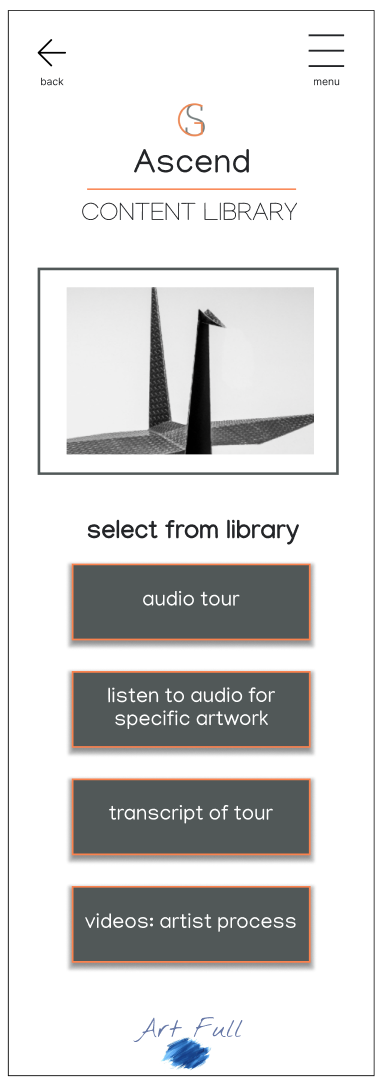
Creating value for the users: competitors already offered basic audio tour functionality, so the challenge was identifying where Art Full could meaningfully differentiate its offerings, which was translated into in-visit vs. after-visit content, multi-media content libraries, sharing features, museum-side analytics, etc.
-
Allowing flexibility in the design: designing around “uncontrolled” content since exhibit content is created in partnership with each museum, designing a flexible content library structure rather than assuming a fixed content set was required.
-
Using user research to assist stakeholders in decision making: the research surfaced a lot of pain points, but the challenge was in facilitating that information into terms and priorities the stakeholders could understand and commit to.
challenges
TAKEAWAYS
-
Timing of metrics: metrics need to be identified, defined, re-evaluated, etc. throughout the project but it was helpful to define effectiveness metrics (content accessed, time on task, conversion, drop-off) before launch, so post-launch design iterations could be evaluated against real engagement data.
-
Designing for flexibility: addressing how much a content-partnership model changes product design approach because the interface has to accommodate variable, museum-supplied content rather than a single, tightly controlled dataset.
-
Designing for trust: to design for trust, not just usability, especially in change-heavy projects, adoption depends as much on communication and framing as on the interface itself.
takeaways
